Many homeowners are looking for cleaner, better-tasting water, but choosing the right solution can be confusing. Reverse osmosis water filtration systems are one of the most effective and widely used options for improving drinking water quality at home.
Whether you’re dealing with unpleasant taste, odours, or just want a more reliable water filtration system for home, reverse osmosis is designed to deliver consistent, high-quality drinking water straight from your tap.
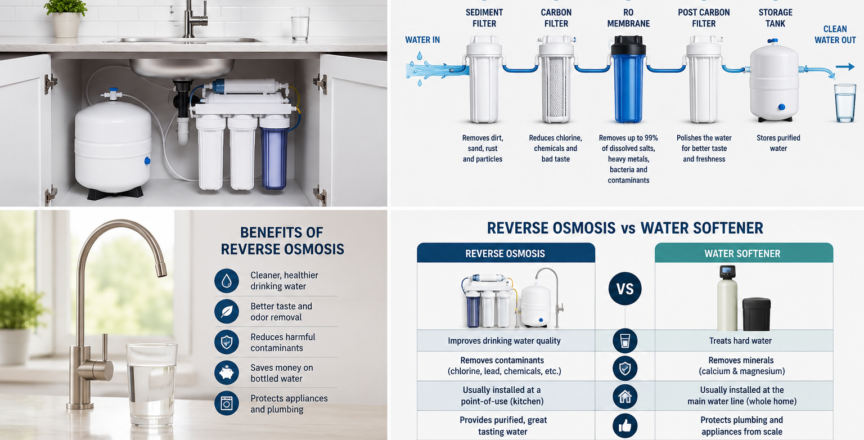
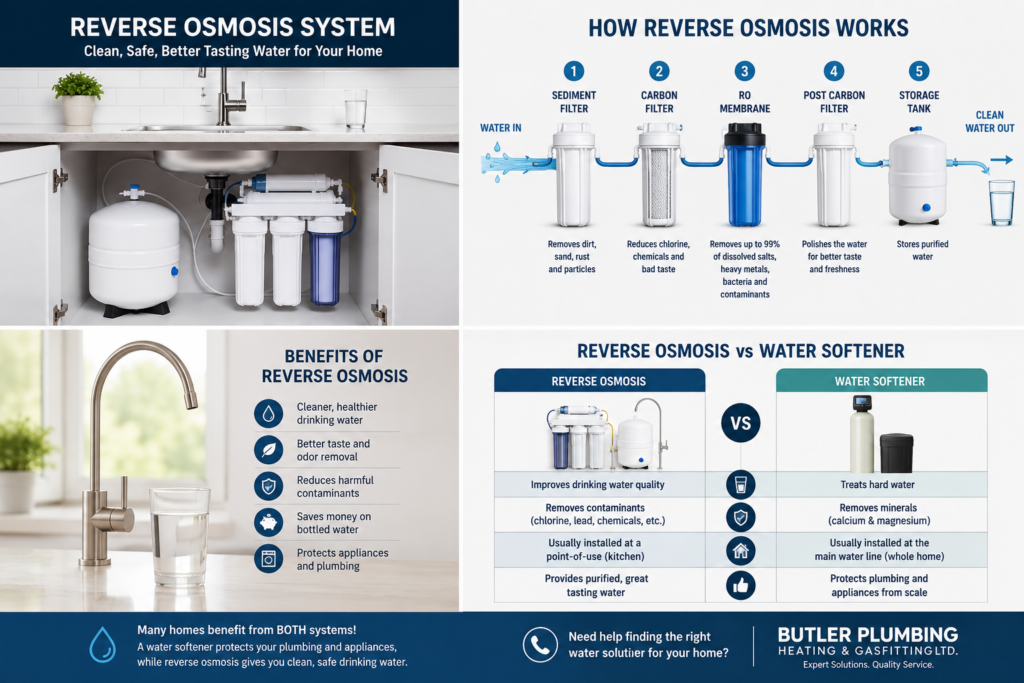
Reverse osmosis (often called RO) is a water filtration process that uses pressure and a semi-permeable membrane to filter impurities and dissolved contaminants from water. The membrane contains extremely small pores that allow water molecules to pass through while blocking many unwanted substances. As water moves through the system, contaminants are separated and flushed away while cleaner water moves into a storage tank for everyday use. Most home reverse osmosis systems are installed beneath kitchen sinks and provide purified water directly from a dedicated faucet.
Edmonton homeowners choose reverse osmosis water filtration systems for their homes because they provide:
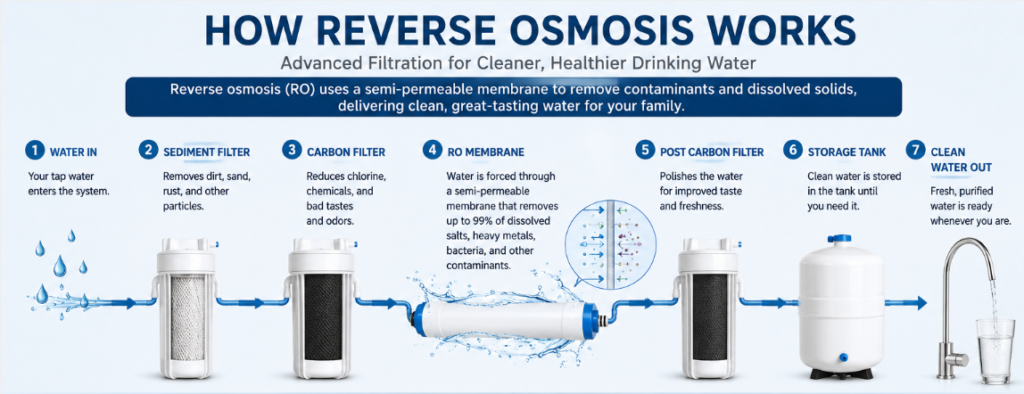
Rather than relying on a single basic filter, an RO system utilizes a highly effective multi-stage filtration process to ensure complete purification.
Before reaching the delicate membrane, raw water travels through sediment and carbon pre-filters. These filters catch larger particles to protect the system, reducing:
The semi-permeable membrane acts as the heart of the system. Under household water pressure, water is forced through microscopic openings. Dissolved solids and impurities that sneak past the pre-filters are trapped here and swept away.
The ultra-pure water flows into a sanitized storage tank where it remains sealed and ready for use.
When you turn on your dedicated tap, the water passes through a final post-carbon “polishing” filter. This final step removes any remaining trace tastes or odours, ensuring high-quality drinking water from your home reverse osmosis system.
Water quality can vary depending on your source and local conditions.
A reverse osmosis system may help reduce:
Water quality results vary depending on the system used and your specific water conditions.
Unlike basic filters, this type of water purifier is designed to remove a wider range of dissolved contaminants, helping improve overall water taste and clarity.
This is one of the main reasons homeowners install reverse osmosis systems — they provide noticeably better drinking water quality straight from the tap. Many users report an immediate improvement in taste, especially when compared to untreated municipal water or standard filtration methods.
Minerals and contaminants can affect flavour. Filtered water often improves:
Purchasing bottled water regularly can become expensive. A reverse osmosis system allows homeowners to access filtered water directly from home.
Rather than using pitchers or countertop filters, RO systems provide filtered water whenever you need it.
Many homeowners appreciate knowing they have an added layer of filtration for their household drinking water.
Many people assume reverse osmosis and water softeners are identical systems, but they solve different problems.
| Feature / Goal | Reverse Osmosis (RO) System | Water Softener |
| Primary Purpose | Purifies and improves drinking water quality | Eliminates hard water issues (scale buildup) |
| What it Removes | Contaminants, heavy metals (lead), chlorine, dissolved solids | Calcium and magnesium minerals |
| Installation Point | Typically point-of-use (under the kitchen sink) | Whole-house (where the main water line enters) |
| Main Benefit | Crisp, bottled-water quality taste for drinking & cooking | Protects plumbing, appliances, skin, and clothing |
A water softener helps reduce hard water issues such as scale buildup, dry skin, soap scum, and mineral accumulation. Reverse osmosis focuses on improving drinking water quality. Many homes benefit from using both systems together.
Yes. Many homeowners choose to install both systems. A water softener can help remove hardness minerals before water reaches a reverse osmosis system.
Benefits may include:
While Edmonton’s municipal water treated by EPCOR is highly regulated and safe, local homeowners still face specific water quality challenges. Our water originates from the North Saskatchewan River, meaning its composition shifts drastically with the seasons.
During the spring runoff, increased organic matter in the river requires temporary adjustments to water treatment, which often results in a distinct, heavy chlorine or “earthy” taste and smell in your tap water. Furthermore, Edmonton’s water is classified as moderately hard, leaving mineral spots on dishes and scale in kettles.
A reverse osmosis system acts as your home’s personalized, final barrier—wiping out seasonal taste fluctuations, chlorine odours, and mineral scaling perfectly.
You should consider installing an under-sink RO system if you notice any of the following:
While DIY kits exist, proper professional reverse osmosis installation ensures your water system performs at peak efficiency. Our certified team ensures secure plumbing connections to prevent hidden under-sink leaks, configures the drain line correctly, and tests your household water pressure to verify that the membrane functions flawlessly.
If you are looking for reverse osmosis Edmonton solutions to improve taste, odours, or overall water quality, call Butler Plumbing today. A properly installed water purification system can significantly improve everyday drinking water quality in local homes.
At Butler Plumbing Heating & Gasfitting Ltd., we provide water treatment solutions designed around your home’s needs. Whether you’re exploring reverse osmosis systems, water filtration solutions, or water softener installations, our team can help identify the right option for your household.
Contact Butler Plumbing today to learn more about improving your home’s water quality.
Yes, because the RO membrane is incredibly precise, it removes virtually all dissolved solids, including minerals like calcium and magnesium. If you prefer mineralized water, premium RO systems can be installed with a remineralization stage that adds healthy, natural minerals back into the water just before it hits your glass for an optimal pH balance and crisp taste.
To keep the system running efficiently, standard sediment and carbon pre-filters should be replaced every 6 to 12 months. The core reverse osmosis membrane itself is highly durable and typically only needs replacement every 2 to 3 years.
To keep the microscopic pores of the membrane from clogging, RO systems must flush away the trapped contaminants during the filtration process, creating some wastewater. However, modern residential systems are highly efficient, and because the water is used strictly for drinking and cooking, the impact on your monthly utility bill is minimal.